Published Work
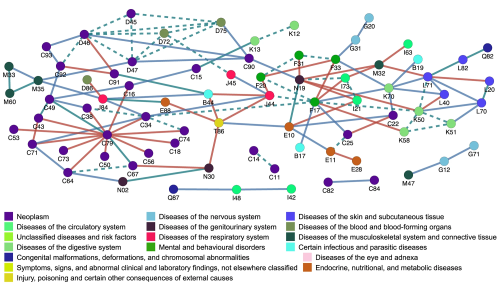
Authors: J. Sánchez-Valle, M. Flores-Rodero, F.X. Costa, J. Carbonell-Caballero, I. Núñez-Carpintero, R. Tabarés-Seisdedos, L.M. Rocha, D. Cirillo, A. Valencia
Abstract: Humans present sex-driven biological differences. Consequently, the prevalence of analyzing specific diseases and comorbidities differs between the sexes, directly impacting patients’ management and treatment. Despite its relevance and the growing evidence of said differences across numerous diseases (with 4,370 PubMed results published within the past year), knowledge at the comorbidity level remains limited. In fact, to date, no study has attempted to identify the biological processes altered differently in women and men, promoting differences in comorbidities. To shed light on this problem, we analyze expression data for more than 100 diseases from public repositories, analyzing each sex independently. We calculate similarities between differential expression profiles by disease pairs and find that 13-16% of transcriptomically similar disease pairs are sex-specific. By comparing these results with epidemiological evidence, we recapitulate 53-60% of known comorbidities distinctly described for men and women, finding sex-specific transcriptomic similarities between sex-specific comorbid diseases. The analysis of shared underlying pathways shows that diseases can co-occur in men and women by altering alternative biological processes. Finally, we identify different drugs differentially associated with comorbid diseases depending on patients’ sex, highlighting the need to consider this relevant variable in the administration of drugs due to their possible influence on comorbidities.
Available Here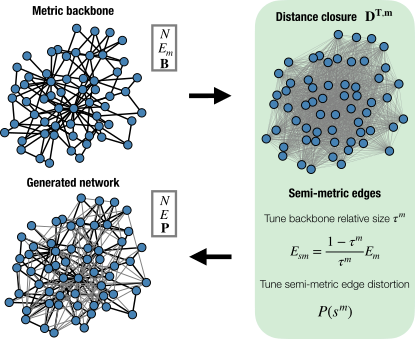
Authors: D. S. Paños, F.X. Costa, L. M. Rocha
Abstract: Sparsification aims at extracting a reduced core of associations that best preserves both the dynamics and topology of networks while reducing the computational cost of simulations. We show that the semi-metric topology of complex networks yields a natural and algebraically-principled sparsification that outperforms existing methods on those goals. Weighted graphs whose edges represent distances between nodes are semi-metric when at least one edge breaks the triangle inequality (transitivity). We first confirm with new experiments that the metric backbonea unique subgraph of all edges that obey the triangle inequality and thus preserve all shortest pathsrecovers Susceptible-Infected dynamics over the original non-sparsified graph. This recovery is improved when we remove only those edges that break the triangle inequality significantly, i.e., edges with large semi-metric distortion. Based on these results, we propose the new semi-metric distortion sparsification method to progressively sparsify networks in decreasing order of semi-metric distortion. Our method recovers the macro- and micro-level dynamics of epidemic outbreaks better than other methods while also yielding sparser yet connected subgraphs that preserve all shortest paths. Overall, we show that semi-metric distortion overcomes the limitations of edge betweenness in ranking the dynamical relevance of edges not participating in any shortest path, as it quantifies the existence and strength of alternative transmission pathways.
Available Here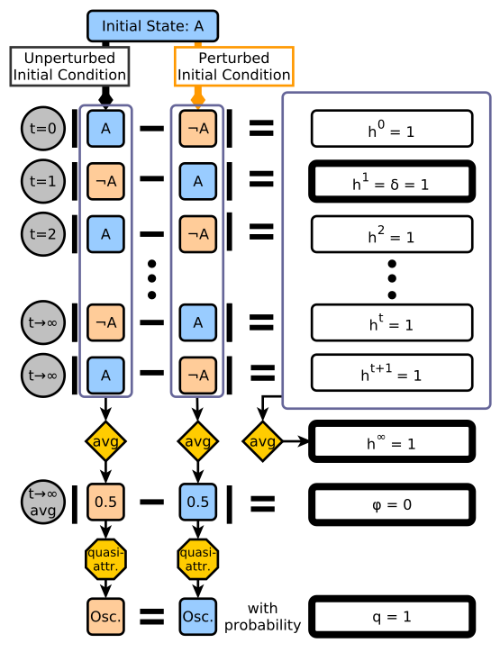
Authors: K. H. Park, F.X. Costa, L. M. Rocha, R. Albert, J. C. Rozum
Abstract: Complex living systems are thought to exist at the “edge of chaos” separating the ordered dynamics of robust function from the disordered dynamics of rapid environmental adaptation. Here, a deeper inspection of 72 experimentally supported discrete dynamical models of cell processes reveals previously unobserved order on long time scales, suggesting greater rigidity in these systems than was previously conjectured. We find that propagation of internal perturbations is transient in most cases, and that even when large perturbation cascades persist, their phenotypic effects are often minimal. Moreover, we find evidence that stochasticity and desynchronization can lead to increased recovery from regulatory perturbation cascades. Our analysis relies on new measures that quantify the tendency of perturbations to spread through a discrete dynamical system. Computing these measures was not feasible using current methodology; thus, we developed a multipurpose CUDA-based simulation tool, which we have made available as the open-source Python library cubewalkers. Based on novel measures and simulations, our results suggest that—contrary to current theory—cell processes are ordered and far from the edge of chaos.
Available Here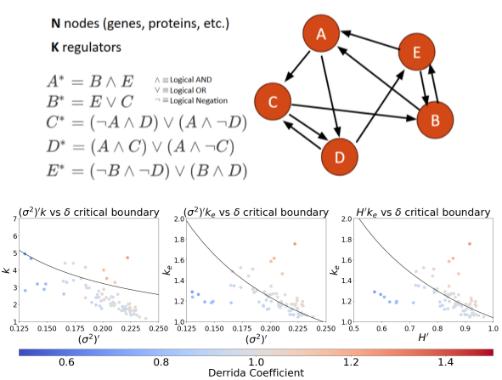
Authors: F.X. Costa, J. C. Rozum, A. M. Marcus, L. M. Rocha
Abstract: Biomolecular network dynamics are thought to operate near the critical boundary between ordered and disordered regimes, where large perturbations to a small set of elements neither die out nor spread on average. A biomolecular automaton (e.g., gene, protein) typically has high regulatory redundancy, where small subsets of regulators determine activation via collective canalization. Previous work has shown that effective connectivity, a measure of collective canalization, leads to improved dynamical regime prediction for homogeneous automata networks. We expand this by (i) studying random Boolean networks (RBNs) with heterogeneous in-degree distributions, (ii) considering additional experimentally validated automata network models of biomolecular processes, and (iii) considering new measures of heterogeneity in automata network logic. We found that effective connectivity improves dynamical regime prediction in the models considered; in RBNs, combining effective connectivity with bias entropy further improves the prediction. Our work yields a new understanding of criticality in biomolecular networks that accounts for collective canalization, redundancy, and heterogeneity in the connectivity and logic of their automata models. The strong link we demonstrate between criticality and regulatory redundancy provides a means to modulate the dynamical regime of biochemical networks.
Available Here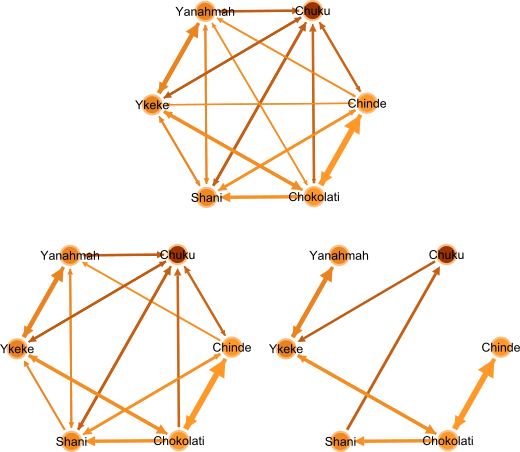
Authors: F.X. Costa, R. B. Correia, L. M. Rocha
Abstract: In weighted graphs the shortest path between two nodes is often reached through an indirect path, out of all possible connections, leading to structural redundancies which play key roles in the dynamics and evolution of complex networks. We have previously developed a parameter-free, algebraically-principled methodology to uncover such redundancy and reveal the distance backbone of weighted graphs, which has been shown to be important in transmission dynamics, inference of important paths, and quantifying the robustness of networks. However, the method was developed for undirected graphs. Here we expand this methodology to weighted directed graphs and study the redundancy and robustness found in nine networks ranging from social, biomedical, and technical systems. We found that similarly to undirected graphs, directed graphs in general also contain a large amount of redundancy, as measured by the size of their (directed) distance backbone. Our methodology adds an additional tool to the principled sparsification of complex networks and the measure of their robustness.
Available Here
Authors: P. Pessoa, F.X. Costa, A. Caticha
Abstract: Entropic dynamics is a framework in which the laws of dynamics are derived as an application of entropic methods of inference. Its successes include the derivation of quantum mechanics and quantum field theory from probabilistic principles. Here, we develop the entropic dynamics of a system, the state of which is described by a probability distribution. Thus, the dynamics unfolds on a statistical manifold that is automatically endowed by a metric structure provided by information geometry. The curvature of the manifold has a significant influence. We focus our dynamics on the statistical manifold of Gibbs distributions (also known as canonical distributions or the exponential family). The model includes an “entropic” notion of time that is tailored to the system under study; the system is its own clock. As one might expect that entropic time is intrinsically directional; there is a natural arrow of time that is led by entropic considerations. As illustrative examples, we discuss dynamics on a space of Gaussians and the discrete three-state system.
Available Here
Authors: F.X. Costa, P. Pessoa
Abstract: Here we present the entropic dynamics formalism for networks. That is, a framework for the dynamics of graphs meant to represent a network derived from the principle of maximum entropy and the rate of transition is obtained taking into account the natural information geometry of probability distributions. We apply this framework to the Gibbs distribution of random graphs obtained with constraints on the node connectivity. The information geometry for this graph ensemble is calculated and the dynamical process is obtained as a diffusion equation. We compare the steady state of this dynamics to degree distributions found on real-world networks.
Available Here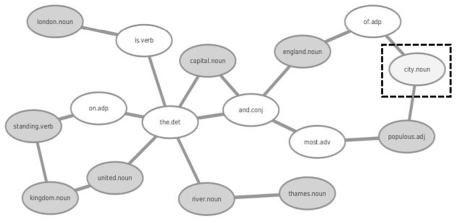
Authors: F. Cronemberger, J.R. Gil-Garcia, F.X. Costa, T.A. Pardo.
Abstract: Discussions about smart cities continue to attract much attention from researchers, practitioners and citizens at large. As the literature continues to grow the number of indicators and frameworks for "smartness" are becoming more robust and perspectives on what makes a city smart continue to evolve. This exploratory research analyzes text from 51 Wikipedia articles that describe cities considered "smart" according to three globally recognized and independent rankings of cities. By comparing findings on word frequencies and word associations found in Wikipedia articles with terminology found in academic literature on smart cities, this study intends to determine to what extent data about smart cities produced through Wikipedia's crowdsourcing approach relates to theoretical developments in the field. This inductive approach may open avenues to the application of automated text analysis methods in theorizing and empirical efforts with information produced about smart cities. This exploratory work may facilitate conceptual understanding of the properties and features of smart cities and may also open avenues to future applications of alternative conceptualization methods.
Available Here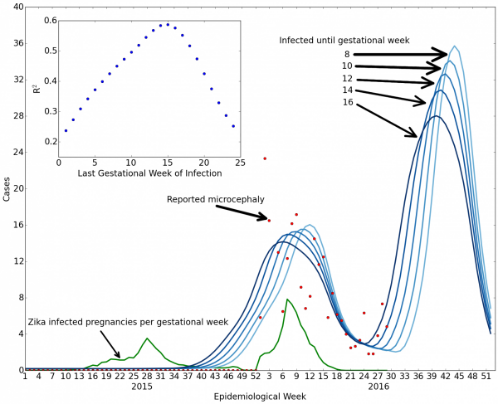
Authors: R. Parens, H. F. Nijhout, A. Morales, F.X. Costa, Y. Bar-Yam
Abstract: The Zika virus has been the primary suspect in the large increase in incidence of microcephaly in 2015-6 in Brazil. While evidence for Zika being the cause of some of the cases is strong, its role as the primary cause of the large number of cases in Brazil has not been confirmed. Recently, the disparity between the incidences in different geographic locations has led to questions about the virus’s role. Here we consider the alternative possibility that the use of the insecticide pyriproxyfen for control of mosquito populations in Brazilian drinking water is the primary cause. Pyriproxifen is a juvenile hormone analog which has been shown to correspond in mammals to a number of fat soluble regulatory molecules including retinoic acid, a metabolite of vitamin A, with which it has cross-reactivity and whose application during development has been shown to cause microcephaly. Methoprene, another juvenile hormone analog that was approved as an insecticide based upon tests performed in the 1970s, has metabolites that bind to the mammalian retinoid X receptor, and has been shown to cause developmental disorders in mammals. Isotretinoin is another example of a retinoid causing microcephaly in human babies via maternal exposure and activation of the retinoid X receptor in developing fetuses. Moreover, tests of pyriproxyfen by the manufacturer, Sumitomo, widely quoted as giving no evidence for developmental toxicity, actually found some evidence for such an effect, including low brain mass and arhinencephaly—incomplete formation of the anterior cerebral hemispheres—in exposed rat pups. Finally, the pyriproxyfen use in Brazil is unprecedented—it has never before been applied to a water supply on such a scale. Claims that it is not being used in Recife, the epicenter of microcephaly cases, do not distinguish the metropolitan area of Recife, where it is widely used, and the municipality, and have not been adequately confirmed. Given this combination of information about molecular mechanisms and toxicological evidence, we strongly recommend that the use of pyriproxyfen in Brazil be suspended until the potential causal link to microcephaly is investigated further.
Available Here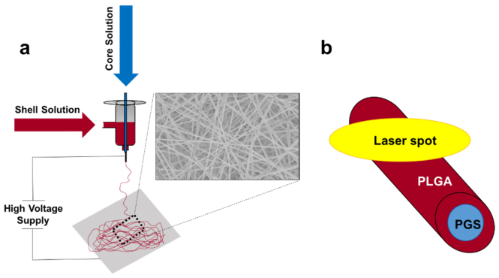
Authors: L. Sfakis, A. Sharikova, D. Tuschel, F.X. Costa, M. Larsen, A. Khmaladze, J. Castracane.
Abstract: Core/shell nanofibers are becoming increasingly popular for applications in tissue engineering. Nanofibers alone provide surface topography and increased surface area that promote cellular attachment; however, core/shell nanofibers provide the versatility of incorporating two materials with different properties into one. Such synthetic materials can provide the mechanical and degradation properties required to make a construct that mimics in vivo tissue. Many variations of these fibers can be produced. The challenge lies in the ability to characterize and quantify these nanofibers post fabrication. We developed a non-invasive method for the composition characterization and quantification at the nanoscale level of fibers using Confocal Raman microscopy. The biodegradable/biocompatible nanofibers, Poly (glycerol-sebacate)/Poly (lactic-co-glycolic) (PGS/PLGA), were characterized as a part of a fiber scaffold to quickly and efficiently analyze the quality of the substrate used for tissue engineering.
Available Here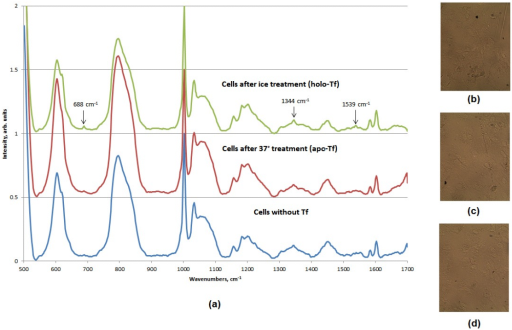
Authors: A. Das, F.X. Costa, A. Khmaladze, M. Barroso, A. Sharikova
Abstract: Raman scattering microscopy is a powerful imaging technique used to identify chemical composition, structural and conformational state of molecules of complex samples in biology, biophysics, medicine and materials science. In this work, we have shown that Raman techniques allow the measurement of the iron content in protein mixtures and cells. Since the mechanisms of iron acquisition, storage, and excretion by cells are not completely understood, improved knowledge of iron metabolism can offer insight into many diseases in which iron plays a role in the pathogenic process, such as diabetes, neurodegenerative diseases, cancer, and metabolic syndrome. Understanding of the processes involved in cellular iron metabolism will improve our knowledge of cell functioning. It will also have a big impact on treatment of diseases caused by iron deficiency (anemias) and iron overload (hereditary hemochromatosis). Previously, Raman studies have shown substantial differences in spectra of transferrin with and without bound iron, thus proving that it is an appropriate technique to determine the levels of bound iron in the protein mixture. We have extended these studies to obtain hyperspectral images of transferrin in cells. By employing a Raman scanning microscope together with spectral detection by a highly sensitive back-illuminated cooled CCD camera, we were able to rapidly acquire and process images of fixed cells with chemical selectivity. We discuss and compare various methods of hyperspectral Raman image analysis and demonstrate the use of these methods to characterize cellular iron content without the need for dye labeling.
Available Here